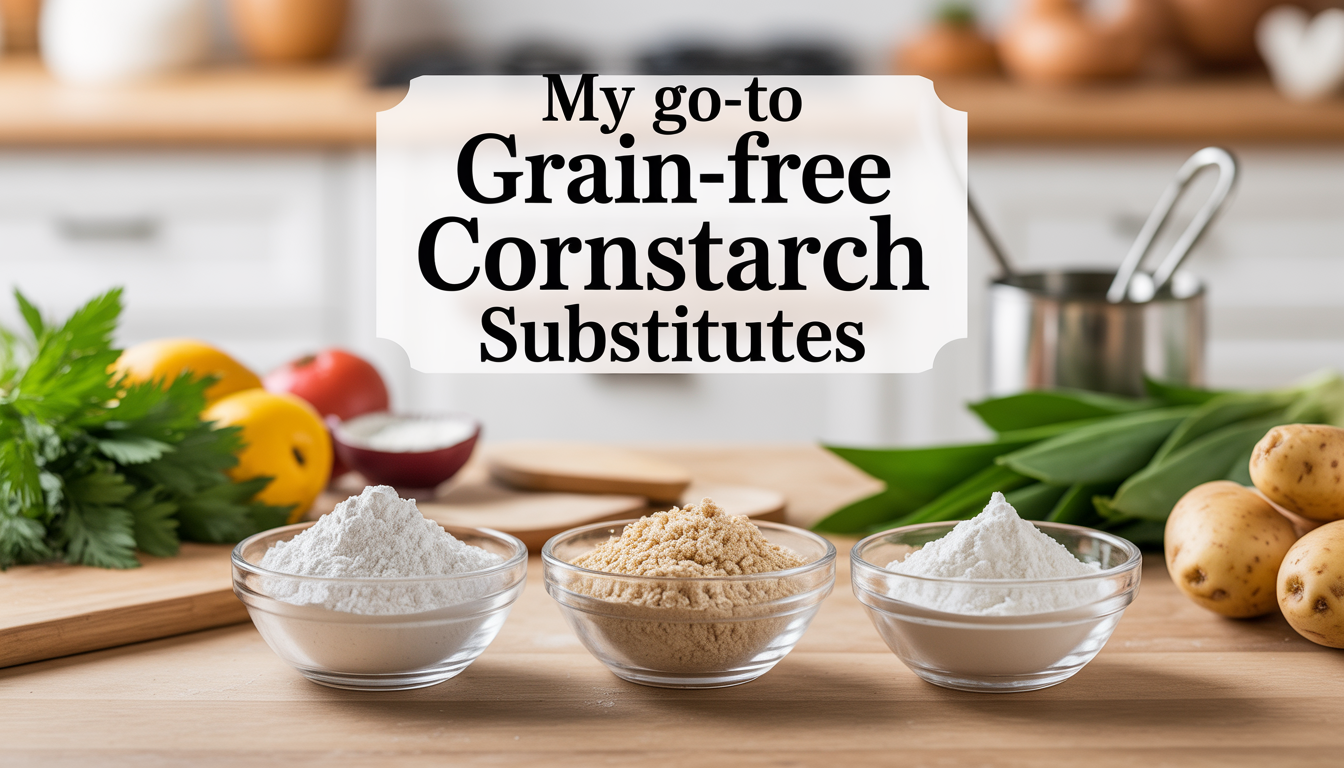
I once tried to thicken a homemade gravy with what I thought was cornstarch, but it turned out to be powdered sugar. My dinner guests were very nice about my “sweet onion syrup,” but that was the day I decided to become an expert on every thickening agent in the world. Since I started my journey into grain-free cooking, I have found some amazing ways to get that perfect texture without using corn at all.
Why I Looked for a Grain-Free Cornstarch Substitute:
When I first started changing the way I eat, I did not realize how much corn was in everything. It is in snacks, it is in drinks, and it is definitely in almost every sauce I love to make. For a lot of people, corn is just fine, but for me, I wanted to try grain-free cooking to see if I felt better. The biggest challenge was finding a cornstarch substitute that actually worked. I did not want my soups to be watery, and I definitely did not want my peach pies to run all over the plate like a fruit-filled lake.
I spent months in my kitchen, wearing my favorite flour-covered apron, trying out every white powder I could find. Some were great, some were weird, and some turned my dinner into a bouncy ball. But through all those mistakes, I found the best grain-free thickener options that I use every single day. If you are avoiding grains or have just run out of cornstarch, I am here to share my personal secrets with you.
My Number One Choice: Arrowroot Powder:
If you asked me to pick just one thing to keep in my pantry forever, it would be arrowroot powder. This stuff is like magic in a jar. It comes from the root of a tropical plant, and it is a pure starch that looks and feels exactly like cornstarch. It is very fine, very white, and very soft.
The first time I used it was for a stir-fry sauce. I was worried it would taste like dirt or plants, but it has no taste at all. That is the best part about using it as a thickening agent, because it lets the flavors of your food shine through. When you use arrowroot powder, your sauces come out looking shiny and clear. Cornstarch can sometimes make things look a little cloudy, but arrowroot makes them look professional.
I have learned a few tricks with this one. You should always make a slurry first. A slurry is just a fancy word for mixing the powder with a little bit of cold water before you put it into the hot pot. If you throw the powder straight into hot soup, it will turn into little white clumps that look like tiny dumplings, and nobody wants that. Also, do not cook it for a really long time at a very high heat. If you boil it too much, it loses its power, and your sauce will get thin again. I always add my arrowroot slurry right at the end of the cooking time.
The Versatility of Tapioca Starch:
Another huge favorite of mine is tapioca starch, which some people call tapioca flour. It comes from the cassava root, which is a big tuber that grows in warm places. This is one of the most common gluten-free substitutes you will find in the store today.
I love using tapioca starch when I am making fruit pies or cobblers. Have you ever cut into a pie and all the juice just ran out? That is because it needed a better thickener. Tapioca is amazing because it stays thick even when it is frozen and then thawed. This makes it perfect for when I want to bake a bunch of pies and keep them in the freezer for later.
One thing to know is that tapioca starch can be a little bit “stretchy.” If you use too much, your sauce might feel a bit like melted cheese or a gummy bear. I usually use it in a one-to-one ratio for cornstarch. It gives a beautiful gloss to desserts. I remember making a strawberry rhubarb pie for my grandmother using this, and she could not believe it was grain-free. She said it was the best texture she had ever seen in a pie, and that made me feel like a real pro.
Using Cassava Flour for a Heartier Texture:
Now, cassava flour is a bit different from the starches I just mentioned. While the starches are just the pulled-out starch part of the plant, the flour is the whole root dried and ground up. This means it has more fiber and a bit more substance.
I use cassava flour when I want to make a roux. A roux is when you cook fat and flour together to start a soup or a gravy. Usually, people use wheat flour for this, but in grain-free cooking, cassava is the king. It behaves very much like regular wheat flour. It has a very mild, slightly nutty flavor that I really enjoy.
I once made a big pot of grain-free gumbo. Normally, you need a dark roux for that. I was nervous that the cassava flour would burn or taste strange, but it worked perfectly. It thickened the base of the soup and gave it a rich feeling that made everyone at the table ask for seconds. It is a great cornstarch substitute when you want something that feels a bit more “heavy” and “filling” rather than just a clear sauce.
The Power of Potato Starch:
If you are not avoiding nightshades, potato starch is an incredible tool. Please make sure you buy the starch and not potato flour, because they are very different! Potato starch is very white and light, while the flour is yellow and heavy like mashed potatoes.
I find that potato starch can handle very high temperatures. This makes it a great thickening agent for things that need to boil for a bit. It is also one of my favorite kitchen hacks for making fried food. If you coat chicken or vegetables in a little bit of potato starch before frying them, they get so crunchy you can hear the sound from across the room.
I used to miss fried chicken so much when I stopped eating grains. Then I tried using a mix of potato starch and spices. It was a total game-changer. The crust was light, crisp, and did not get soggy. Even though it is not exactly like cornstarch in every way, it is one of the best grain-free cornstarch substitutes for achieving that perfect crunch.
My Secret Weapon: Kuzu Root Starch:
This is a substitute that not many people know about, but it is very popular in Japan. It is called kuzu or kudzu. It comes in little white chunks that look like chalk. You have to crush them up into a powder before you use them.
I started using kuzu because I read it was very easy on the stomach. Sometimes, when I feel a little bit sick, I make a simple broth and thicken it with kuzu. It creates a very smooth, soothing texture. As a thickening agent, it is very strong. You do not need much of it to get the job done.
It is a bit more expensive than arrowroot powder or tapioca starch, so I save it for special recipes or when I really want a very high-quality finish. It makes the most beautiful, crystal-clear sauces you have ever seen. It feels very fancy, and using it makes me feel like a gourmet chef in my own little kitchen.
Thicken Your Food Without Any Powders:
Sometimes, the best cornstarch substitute is not a powder at all. I have learned that you can use the food itself to make things thicker. This is a very “natural” way of grain-free cooking that I think every home cook should try.
- Pureed Vegetables: One time, I made a vegetable soup that was way too watery. Instead of adding a starch, I took two cups of the cooked vegetables out, put them in my blender, and then stirred the mush back into the pot. It made the soup creamy and thick without adding any extra calories or grains. This works great with cauliflower, potatoes, or even carrots.
- Reduction: This is just a fancy way of saying “boil the water out.” If you have a sauce that is too thin, just keep cooking it on low heat without a lid. The water will turn into steam and leave, making the flavors stronger and the sauce thicker. It takes a little more time, but the taste is amazing.
- Egg Yolks: For very creamy sauces or custards, egg yolks are the best thickening agent. You have to be careful not to scramble them, so you add a little bit of hot liquid to the yolks first to warm them up before putting them in the big pot. I use this for my homemade grain-free puddings.
Tips for Success with Grain-Free Thickeners:
When you are switching to gluten-free substitutes, there is a little bit of a learning curve. I have failed many times, so you do not have to. Here are some of my best kitchen hacks for getting it right every time:
- Always use cold liquid for your slurry. If you use warm water, the starch will start to cook and clump before it ever hits your soup.
- Start with less than you think you need. Many of these grain-free cornstarch substitutes are actually stronger than cornstarch. You can always add more, but it is hard to fix a sauce that has turned into a brick of jelly.
- Watch the gloss. Remember that tapioca starch and arrowroot powder will make your food look shiny. If you want a matte look, like for a gravy, go with cassava flour or potato starch.
- Read the labels. Some bags will say “tapioca flour,” and some will say “tapioca starch,” but in most cases, they are the same thing. However, always double-check that there are no added ingredients or hidden grains.
- Don’t over-stir. Once your sauce is thick, stop stirring it too much. Some grain-free starches can actually break down and get thin again if you beat them up too much with a spoon.
Why I Love This Way of Cooking:
Sharing my story about these grain-free cornstarch substitutes is important to me because I know how frustrating it can be to change your diet. When I first started, I felt like I was losing all my favorite foods. I thought I would never have a thick gravy or a perfect fruit pie again.
But as I learned about arrowroot powder and cassava flour, I realized that the world of food is actually much bigger than I thought. These ingredients are not just “replacements,” they are actually wonderful on their own. In many ways, I think my cooking is better now than it was when I used cornstarch. My sauces are clearer, my crusts are crunchier, and I feel much better after I eat.
If you are just starting your journey into grain-free cooking, do not be afraid to experiment. Try a little bit of tapioca starch in your next stew. See how potato starch changes your fried veggies. You might have a few “sweet onion syrup” moments as I did, but that is how we learn to be great cooks.
Conclusion:
I hope this guide helps you feel more confident in your kitchen and gives you plenty of ideas for your next meal. Choosing the right cornstarch substitute can turn a good dinner into a great one, and I am so happy I could share my experiences with you.
FAQs:
1. Can I use arrowroot powder in the same amount as cornstarch?
Yes, you can usually use a one-to-one ratio for these two.
2. Is tapioca starch the same thing as tapioca flour?
In almost every brand you buy, the product is the exact same.
3. Will cassava flour make my sauce taste like vegetables?
It has a very mild flavor that usually disappears into the dish.
4. Can I freeze sauces made with arrowroot powder?
Yes, arrowroot is actually better for freezing than cornstarch is.
5. What is the best substitute for making things very crunchy?
I always recommend using potato starch for the best possible crunch.
6. Do I have to make a slurry with these substitutes?
Yes, making a slurry prevents clumps and ensures a smooth sauce.